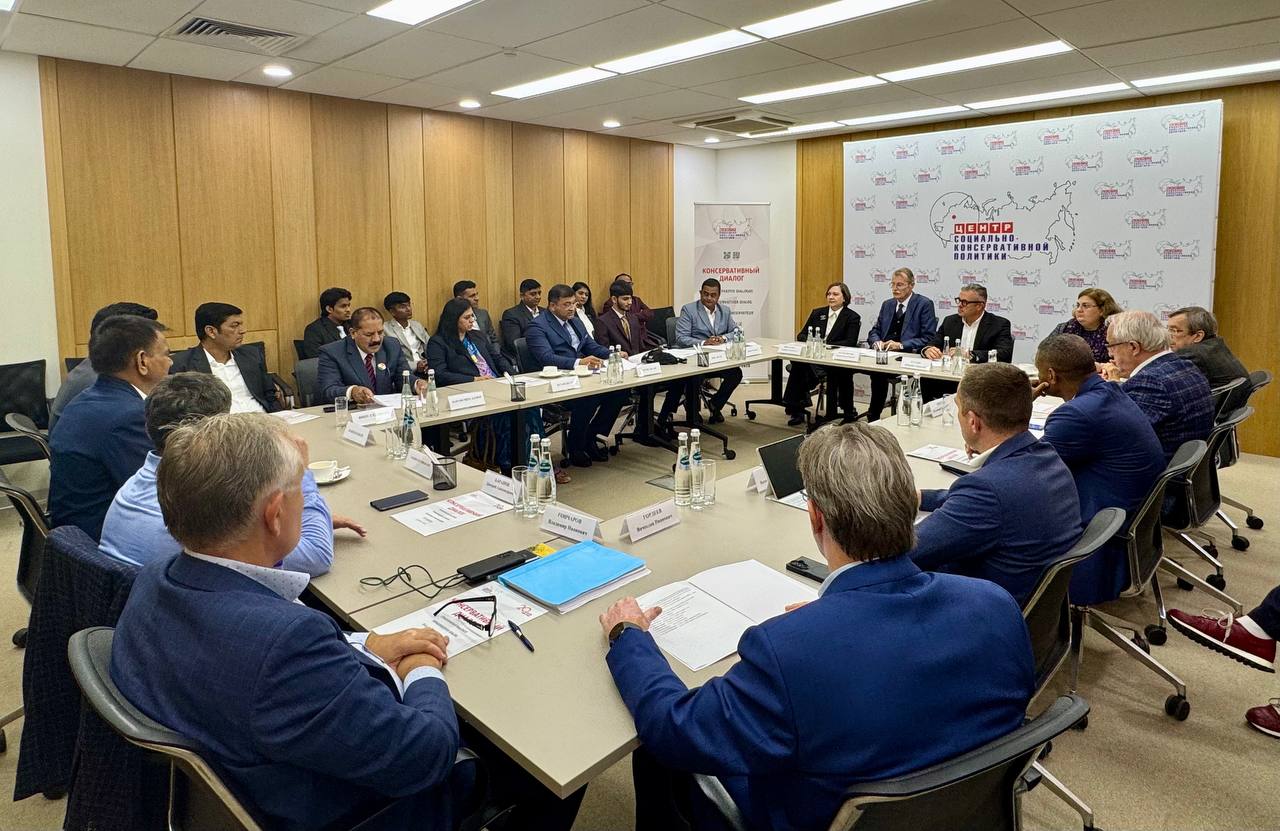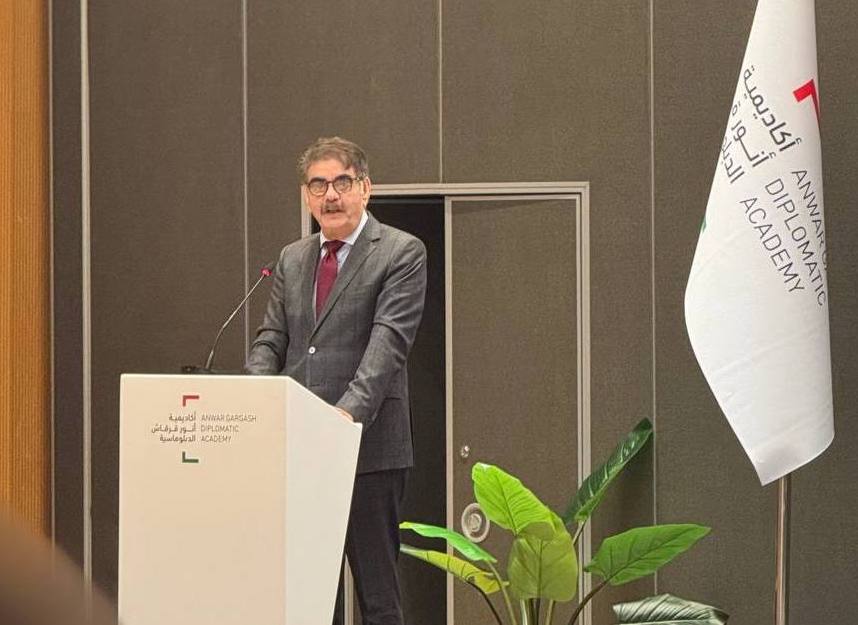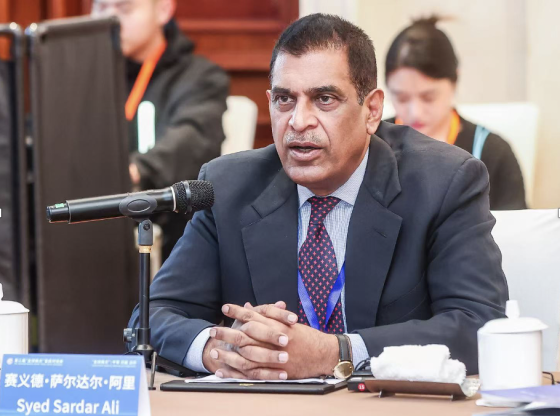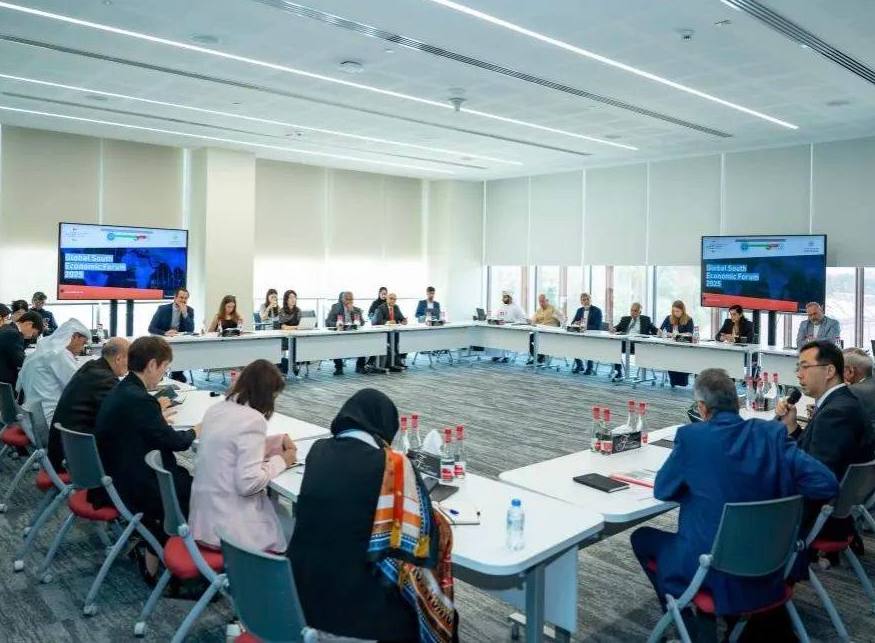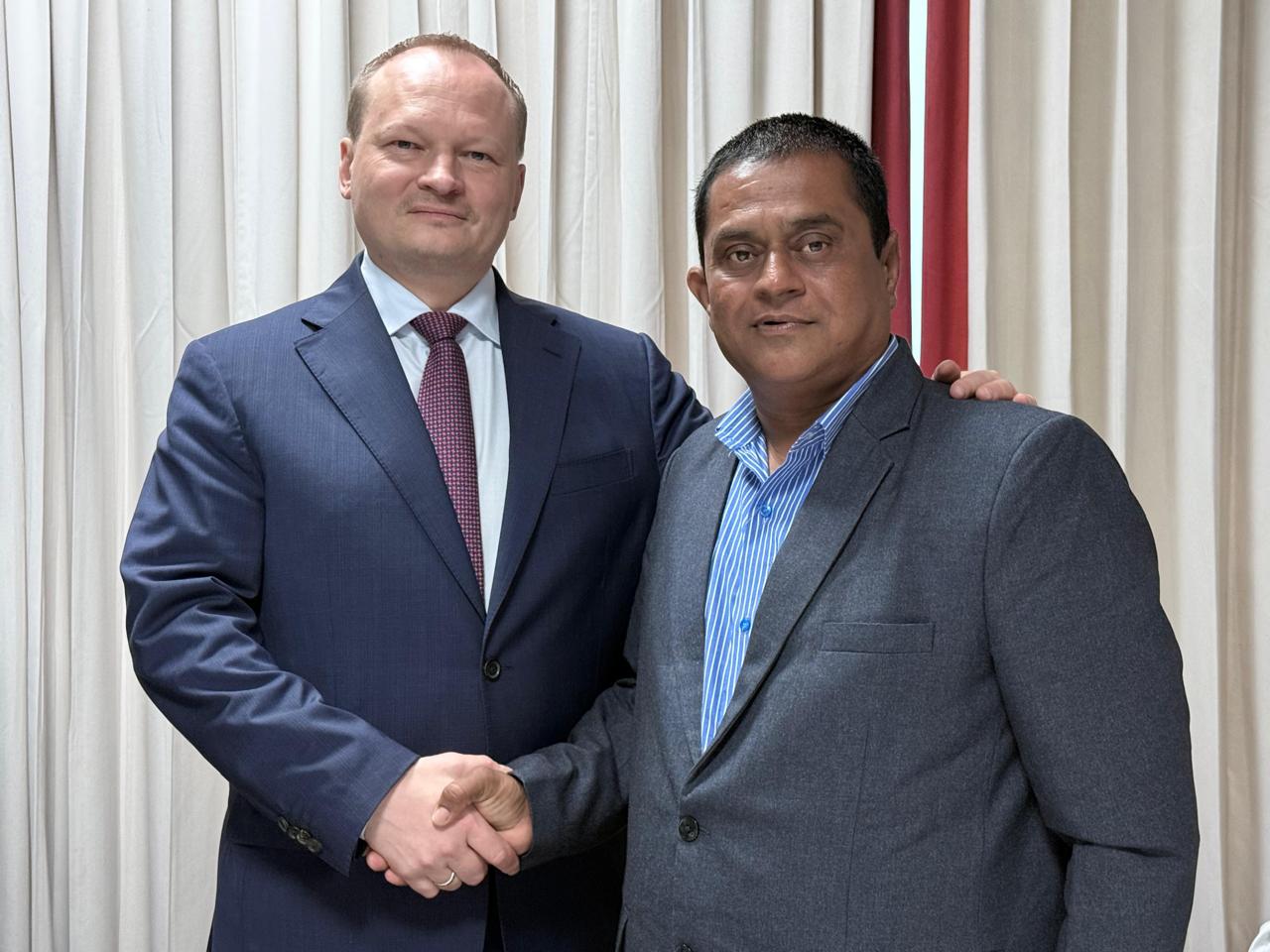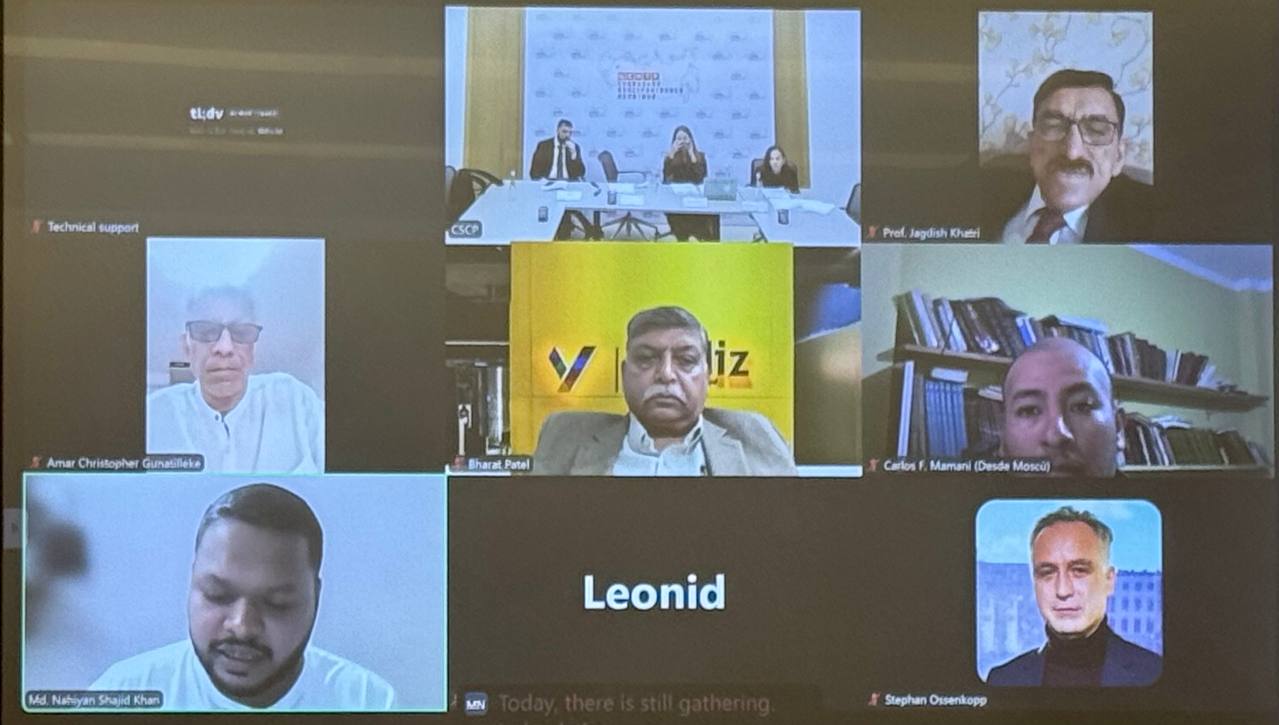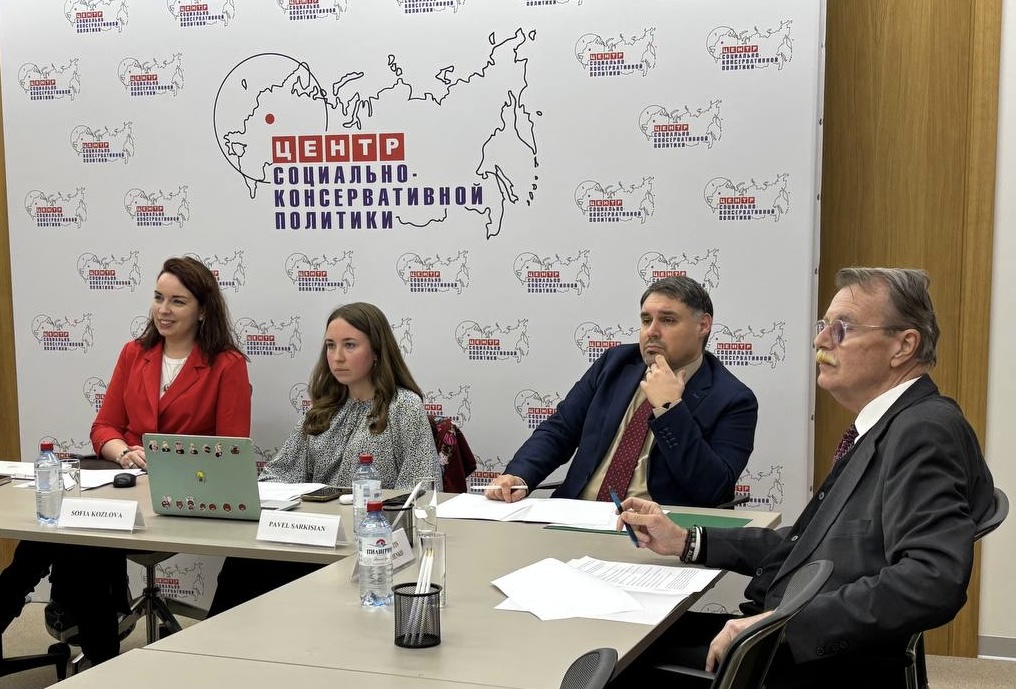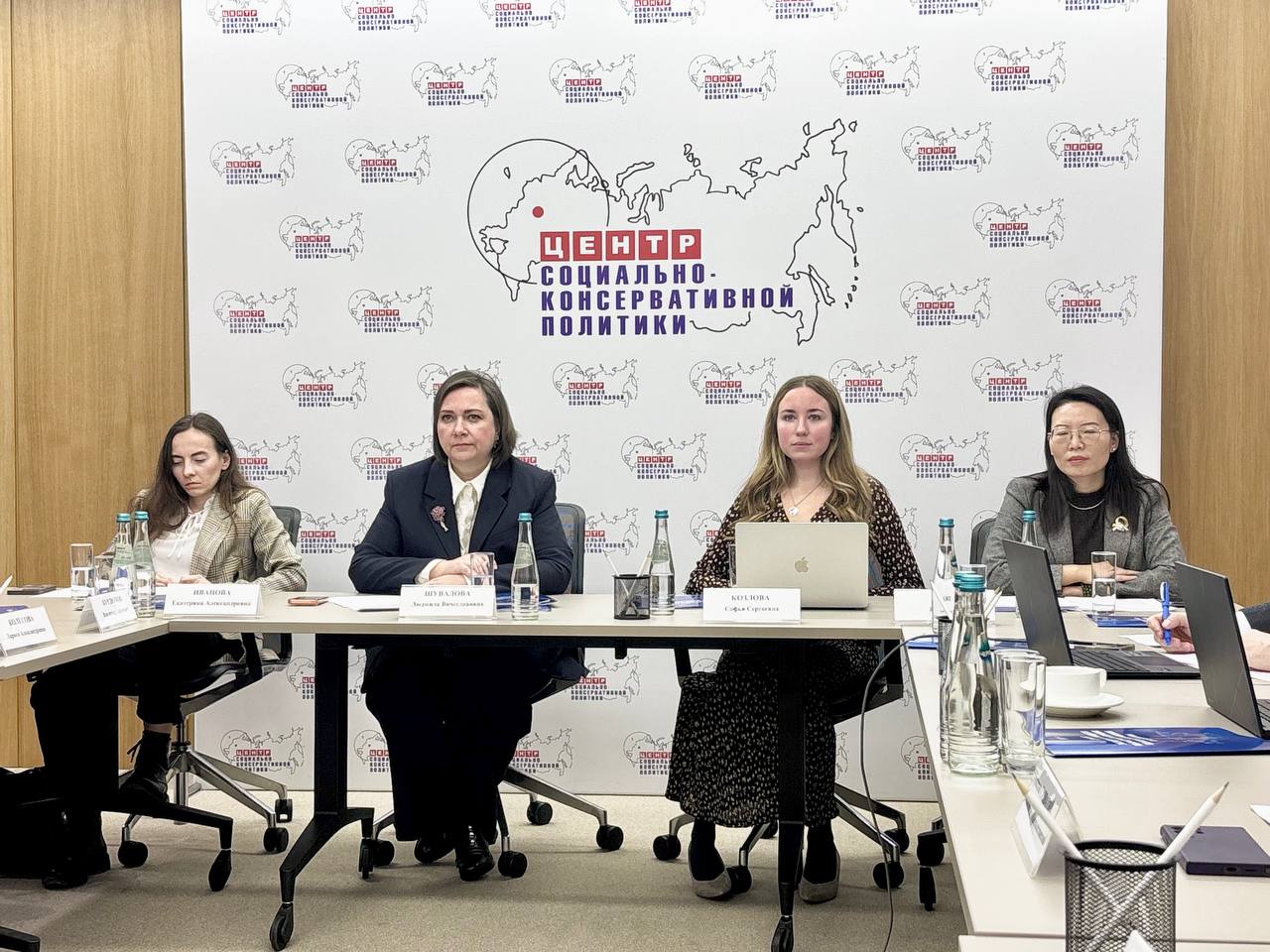
On December 18, 2025, the Center for Social and Conservative Politics (CSCP) in Moscow hosted the international conference «Dialogue of Expert Communities in Eurasia: Main Directions and Prospects», which brought together representatives of think tanks, international organizations, the academic community and expert clubs from the countries of Eurasia and the Global South.
The panel discussion «International Expert Dialogue as a Space for Self-Organization and Cooperation» focused on the issues of self-organization of expert communities, the formation of independent narratives, the role of experts in the implementation of the Greater Eurasian Partnership project, the prospects for expert and analytical activities of international organizations and national research centers in Central Eurasia and the Global South.
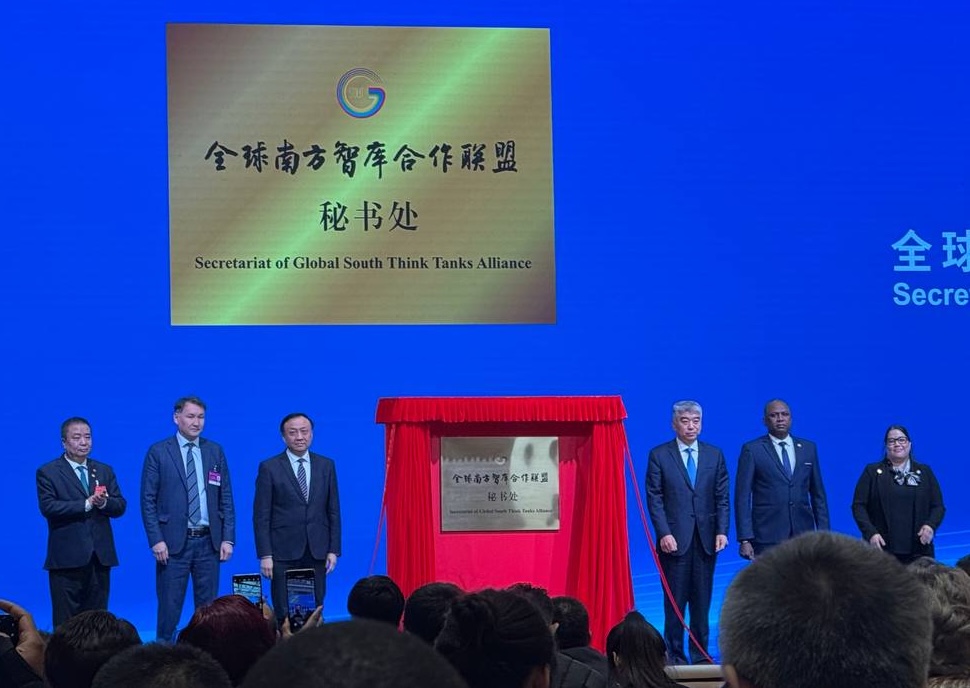
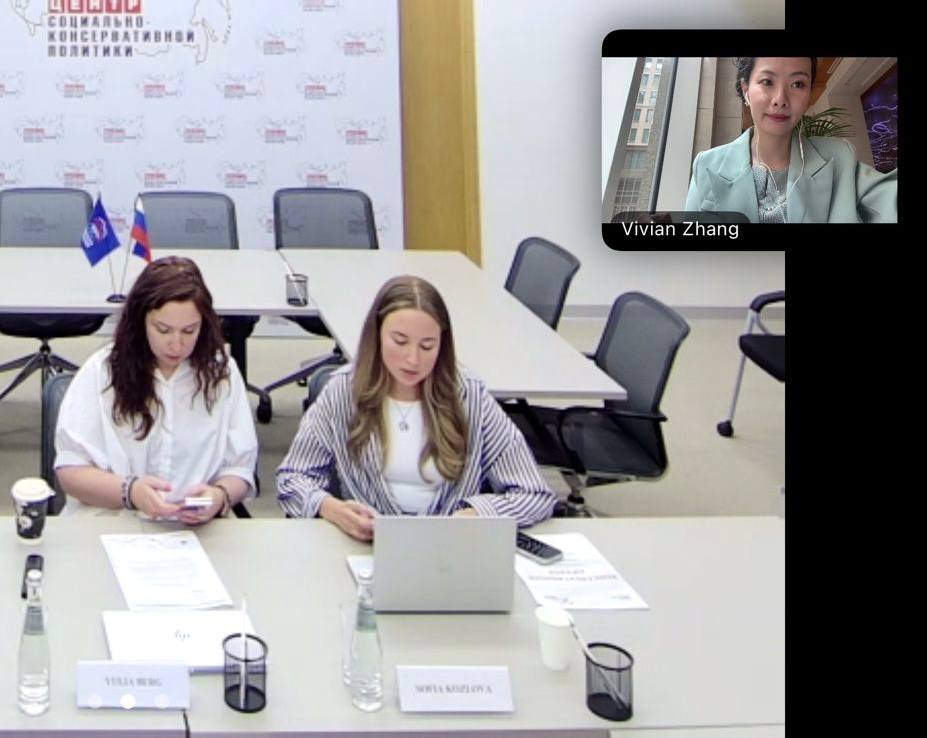
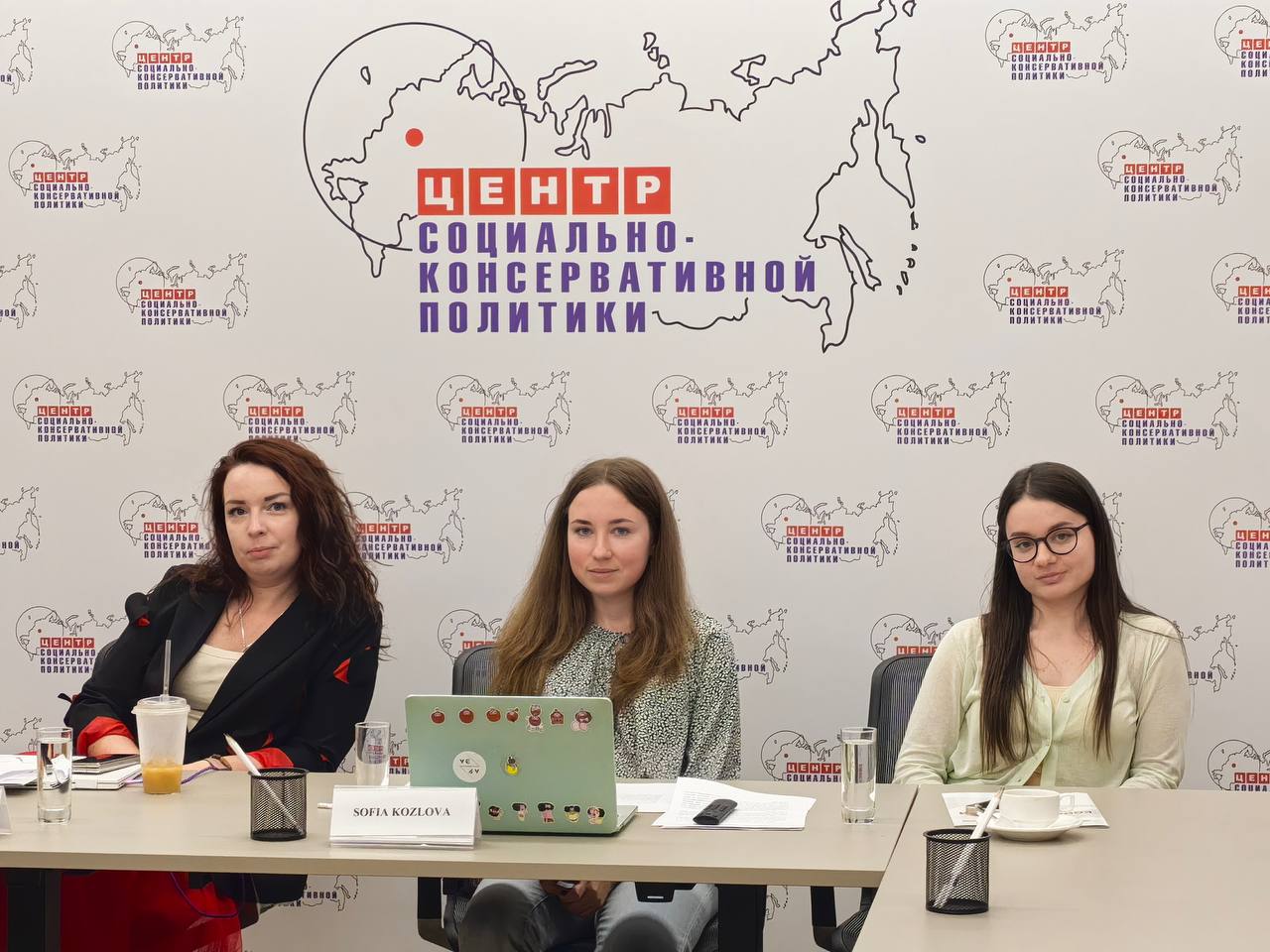
The session was moderated by Sofia Kozlova, CSCP communications chief. In her opening remarks, she noted that such platforms for expert interaction as the Global South Think Tanks Alliance, where the CSCP has been a member since 2024, as well as the Association of CSTO Think Tanks, the work on the establishment of which was initiated in 2025, seem to be promising network structures of a multipolar world.
Opening the session, Lyudmila Shuvalova, Director General of the CSCP stressed that international expert dialogue is now becoming an integral tool for developing responsible decisions that go beyond the boundaries of nation states: «Over the past few years, we have been witnessing an intensification of the processes of self-organization of expert communities. The subject of expert dialogue is increasingly becoming fundamental issues, the solution of which will require international discussion and a joint search for solutions. In conditions when the world and social processes are becoming more complex, international expert dialogue is becoming more and more in demand.»
Bakhtiyor Ergashev, Director of the Ma’no Center for Research Initiatives (Uzbekistan), focused on the need for the countries of the Global South to develop their own intellectual approaches and fill institutional forms of cooperation with real content: «The main task of think tanks in the Global South is to stop taking on faith narratives created from the outside and acting according to them.
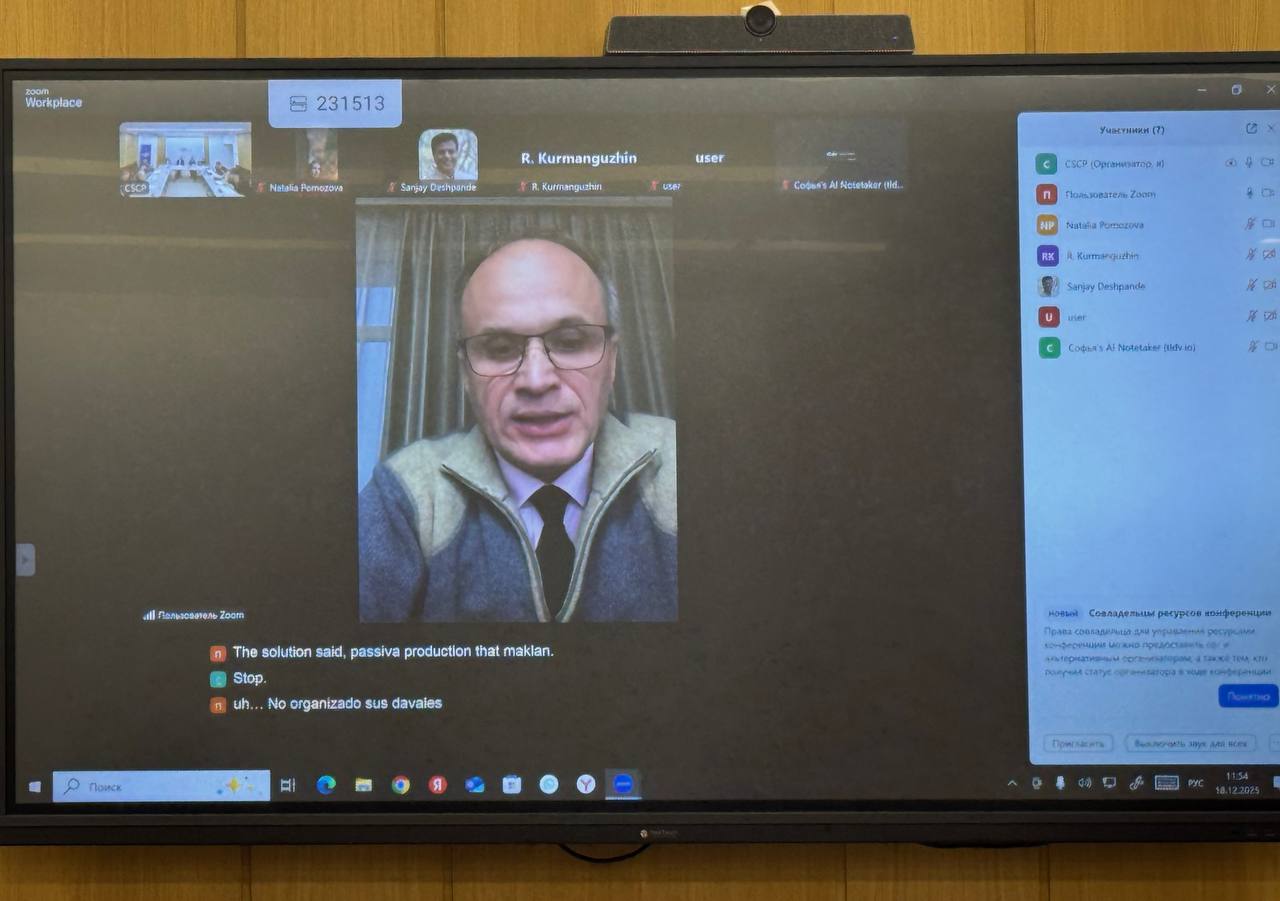
In his speech, Rustem Kurmanguzhin, Associate Professor at the School of Humanities of Narxoz University (Kazakhstan), outlined the problem of fragmentation of expert agendas and the importance of developing the main topics for joint analytical work: «An expert cannot work on all issues, he must sit down and delve into something. Therefore, it is very good that there are many dialogue platforms, but, as an expert, I sometimes get lost. In the Eurasian space, it is necessary to identify priority issues on which the attention of experts should be focused.»
Liu Yanchun, Deputy Director of the Institute of the Russian Language of Dalian Foreign Studies University (China), devoted her speech to the cooperation of universities in the Global South as a strategic basis for intellectual independence: «South-South cooperation in the field of knowledge is a way to overcome the center-periphery model and form our own knowledge production system of the countries of the Global South.»
Director of the Center for Central Eurasian Studies at the University of Mumbai (India), Sanjay Deshpande emphasized the common historical experience of the countries of the Global South and Eurasia and their desire for multipolarity: «The Global South and Central Eurasia are united by the desire for sovereign choice, equal partnership and a fair architecture of international relations.»
In her speech, Ekaterina Ivanova, Consultant to the CSTO Secretariat, outlined the role of the expert community in shaping the future architecture of Eurasian security: «The future Eurasian security system is not a rigid hierarchy, but an open network where expert communities become a connecting fabric and a generator of solutions.»
Siarhei Viarheichyk, Advisor to the Secretariat of the Shanghai Cooperation Organization (SCO), shared his experience in institutionalizing expert and analytical work and stressed the importance of the principle of consensus: «The expert community should form the agenda itself and promote it – this is how ideas get a chance to be converted into practical solutions.»
Natalia Pomozova, Professor at the Russian State University for the Humanities, identified the ethics of artificial intelligence as one of the key topics for future expert cooperation: «The threats posed by artificial intelligence are of the nature of ‘there is a threat, but there is no subject’, and this requires the consolidation of analytical efforts at the international level.»
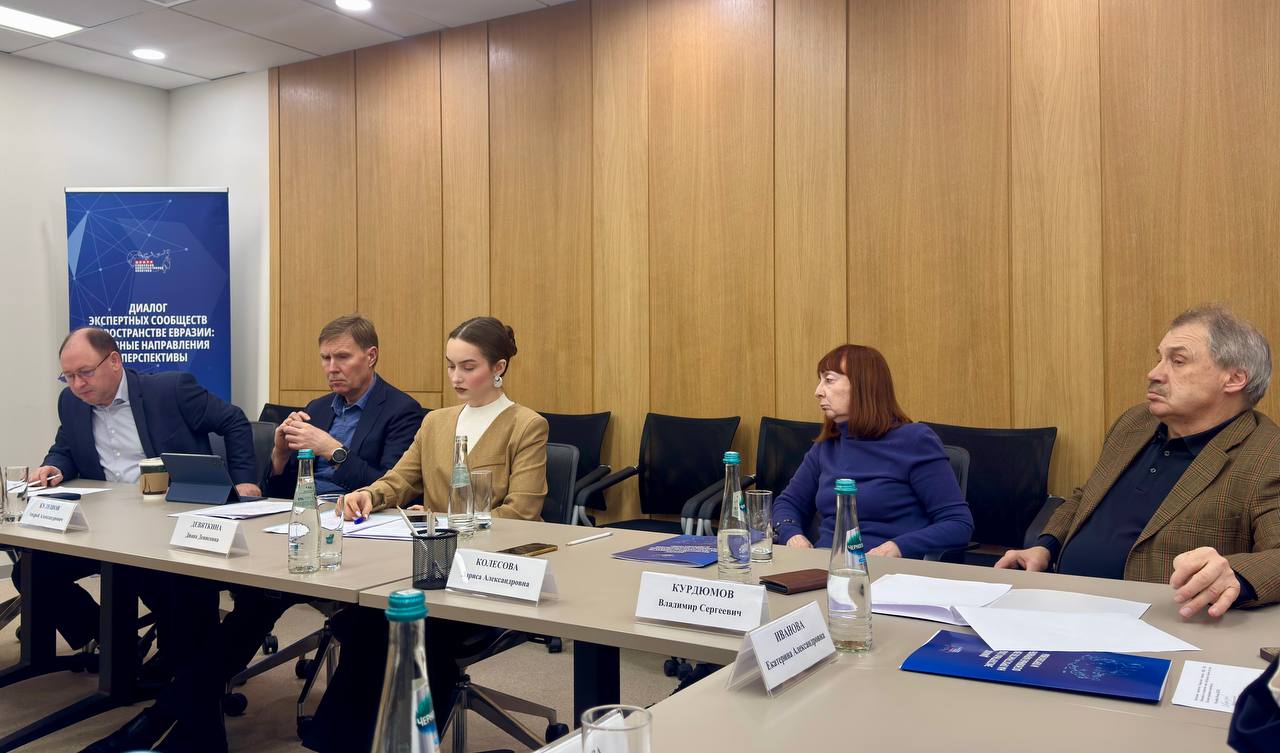
In her speech, Diana Devyatkina, Head of the Eurasian Club of the Diplomatic Academy of the Ministry of Foreign Affairs of the Russian Federation, operated under CIS Executive Committee, spoke about working with young people and forming the future expert generation: «The expert community is impossible without the continuity of generations – it is the practice-oriented environment that forms future analysts.»
Yulia Berg, founder of the GlobUs expert club, noted the resilience of expert networks in the face of trade wars, geopolitical and diplomatic turbulence: «Expert communities have proven that even in the face of a break in traditional communication channels, they are able to maintain a dialogue and provide knowledge sharing, as well as analytical support for the decision-making process.»
Vladimir Rumyantsev, founder of the Digital Platforms Foundation for the Development of the Digital Economy, noted the problem of advanced expertise in the expert circles of Eurasian countries: «On the one hand, we have formal structures – the Academies of Sciences, which claim this by default. But, on the other hand, we understand that really advanced expertise is most often not there. It makes sense to expand this framework in order to involve truly professional experts in this work.»
Andrey Kuleshov, Director for Strategy and Development of the Common Fund for Commodities, drew attention to the fact that the platform of the Common Fund for Commodities, established under the auspices of the UN and engaged in direct investment in the raw materials sector of developing countries, provides additional opportunities for the Global South: «The organization unites 101 states, and 2/3 of them are countries of the Global South, which, in fact, constitute a constitutional majority. In principle, countries in the Global South can use the Fund to advocate for their interests.»

The prospects for the development of the Greater Eurasian Partnership as a space of shared responsibility for a secure future, the experience and problems of expert and analytical activities of international organizations and national research centers of Central Eurasia were in the focus of attention of the participants of the panel discussion «Central Eurasia as the core of the Greater Eurasian Partnership».
The moderator of the section, PR head of the CSTO Secretariat, Yuri Shuvalov, opening the discussion, noted that Russia and its partners have approached a decisive stage in the formation of a new world order, the contours of which have not yet acquired a stable architecture: «Firstly, we are witnessing an irreversible process of the final destruction of the unipolar model of the world order. Second, the world is not just becoming less predictable, it is becoming fundamentally more dangerous. New technologies are fundamentally changing the nature of conflicts, and challenges such as water and biosecurity require urgent, proactive solutions. At the same time, the traditional institutions of international law demonstrate serious failures.»
Dmitry Novikov, a leading researcher at the Center for Central Asian Studies of the Institute of China and Modern Asia of the Russian Academy of Sciences, focused on the key role of think tanks in the formation of Eurasian identity: «Over the past 10 years, think tanks have played almost a key role in spreading the Eurasian narrative, at least within the framework in which it exists. The next stage should be the expansion of high-quality ties between think tanks and their transformation into more systematic, networked formats.»
Eduard Solovyov, Head of the Center for Post-Soviet Studies at the Institute of World Economy and International Relations of the Russian Academy of Sciences, pointed to the increased risks of global instability and the need to rationalize international processes: «The modern world has become less manageable and more dangerous, and it is the expert community that should look for ways to make international relations more predictable.». He also noted that the departure from the Western-centric model of integration determines the need to form their own self-sufficient narratives.

Rector of the Russian State Social University, Academician of the Russian Academy of Arts Andrei Khazin pointed to the need to work to popularize Russian education in friendly countries: «A significant part of the influence in the post-colonial world of those countries that were the metropolises of vast world spaces is due to the fact that they still remain centers of education for the younger generation of the ruling elites of their former colonies. It seems to me that the export of Russian education to those countries is an extremely important state task.»
Dean of the Faculty of International Relations and Oriental Studies of the Kyrgyz National University named after J. Balasagyn Esen Usubaliev stressed the importance of forming scientific and analytical centers at universities in Central Eurasia: «They have the potential to have a more significant and sustainable impact on the socio-political mood in society, while having a large research and human resource, predictable in terms of preserving and defending interests, and are more flexible in terms of decision-making, since they are devoid of many bureaucratic conventions. Moreover, it is also a human resource of experts for the common information space.»
Bishop Savvaty of Bishkek and Kyrgyzstan pointed out the complexity and multidimensionality of the multipolar model: «The post-unipolar world should not be broken into atoms and distanced itself. It is necessary to build a certain configuration in the relations between the subjects of the geopolitical space. These subjects are the state, religion, and ethnic groups.»
Director of the Information and Analytical Department of the CIS Executive Committee Alexander Matyash noted that when discussing the future of Greater Eurasia, it is important to rely on the existing integration institutions and soberly assess the complexity of this path: «When forming the Greater Eurasian space, we must start from those institutions that already exist and are the foundation of this process — primarily the CIS, the EAEU and the CSTO.»

Denis Vozilov, Deputy Director of the Institute of Religion and Law at the Higher School of Economics, noted that further analytical activities will be built around the protection of traditional spiritual and moral values: «And here it is important to interact with expert centers of the CIS countries and other countries of Eurasia, as well as with young people who come to study in Russia.»
Sergey Baranov, an expert analyst at the Expert Institute for Social Research, stressed the need to form a unifying agenda in Eurasia: «It is important for us to preserve Eurasia as a kind of «free zone» where all social types, cultures, and religions are taken into account and respected. This is what the idea of Eurasia should be. If we want to develop a system of think tanks, we must offer something that will be understandable and close to all states and peoples of the continent.»
Boris Mezhuev, Associate Professor at the Lomonosov Faculty of Philosophy, also drew attention to the importance of finding sources of integration in the Eurasian expert community: «Now we are still reaping the favorable fruits of the fact that we are still in some tension towards the West. We need to look for some kind of «global agenda» that can unite different peoples, preventing them from clashing with each other, when it becomes clear that the external forces that unite everyone are leaving.»
Vladimir Izotov, Leading Research Fellow at the Department of Economic Research of the Institute of Europe of the Russian Academy of Sciences, touched upon the key problem of inter-university cooperation in Eurasia: «Unfortunately, the variety of existing formats of cooperation – network universities, bilateral partnership of universities – cannot be translated into quality. A conflict of interest arises, and a different vision of the educational agenda arises, even within the framework of post-Soviet integration. As a result, the international educational agenda remains at the level of bilateral cooperation. This must be solved at least within the framework of the EAEU, and then try to scale.»

Topical areas for collective expert research, the impact of foreign policy and foreign economic trends on the development of decisions on the internal contour, and the prospects for the formation of integral expert formats were in the focus of attention of the participants of the expert session «Intellectual Clubs of Eurasian Countries at the Junction of Domestic and Foreign Policy».
Opening the section, the moderator of the S.P. Kurdyumov Sretensky Club, Larisa Kolesova, drew attention to the factors of anthropic transition, the formation of a unique Man and the formation of a network stage of social development, characterized by the interaction of natural, man-made and social networks, as well as the role of Eurasia in global processes: «Eurasia is the only continent that has formed a human-centric approach. In this context, the formation of the Eurasian expert community is becoming a necessary element of development.»
Igor Zadorin, co-founder and member of the Council of the International Association of Research Agencies «Eurasian Monitor», presented the results of a study of communications between scholars in the humanities of the CIS countries: «Belarus and Kyrgyzstan are more focused on interaction with colleagues from Russia. Azerbaijan and Armenia are more involved in projects with the countries of Western Europe and North America. Kazakhstan is in an intermediate state, experts record an even distribution of communication with both Russian, Western European and American colleagues. Russian experts unexpectedly demonstrated a rather isolationist position. Perhaps we should rethink this paradigm.»
Dmitry Zolotarev, Advisor to the General Director of the CSS Group of Companies, described the outgoing world order: «The previous stage was the stage of universal unification, a single universal value, where the goal of life is maximum comfort. It was characterized by a single technical and technological standard, money as a universal measure of everything. Free movement of people, capital, production. The new stage implies that each macro-region will have its own model, different from the others.»
Valery Muntiyan, Advisor to the VEB.RF Institute, stressed that the faults of the existing unipolar world order can now be traced along the line of continents: «But sooner or later, the world will still return to the «polar» system, because this is what nature provides. Therefore, it is extremely important for us what the new order will be, how it will differ from the existing one, on what principles, worldview, system of meanings and values it will be built. We need to be directly involved in this.»
In his speech, the founder of GR-Group, Andrey Gromov, drew attention to the strengthening of neocolonial practices and external pressure on states, proposing a way to solve the problem: «In fact, any economic benefits and preferences today are given from the outside, and in a package with reforms, which often mean a violation of the social contract between the state and society, as well as a reduction in social benefits: raising the retirement age, reducing social benefits, maternity leave and medical care. New concepts are expected in all developing countries, especially in those that continue to be subjected to the most severe colonial pressure. We need to act more broadly and openly, promote our position and bold ideas.»
In his speech, Alexander Piskunov, Chairman of the Executive Committee of the Analytics Association, spoke about the levels of goal-setting and development management, and also proposed the principles for the formation of institutions for solidarity development in Eurasia.

Olga Rink, Deputy Head of the Laboratory «Machine Learning and Semantic Analysis» of the Institute of Artificial Intelligence of Lomonosov Moscow State University, presented the results of the study «Methodology for Identifying Compliance with Socio-Cultural (Universal) Values», where she presented the results of AI training on recognition in texts and distribution of values into categories using a rubricator. She also spoke about the current work of the laboratory and suggested potential areas for joint research.
The participants noted the need to move from declarative forms of cooperation to substantive expert and analytical work aimed at forming the Greater Eurasian Partnership, establishing their own intellectual base and strengthening security in the Eurasian space. The potential of the Issyk-Kul Expert Initiative, supported by experts from the CSTO member states in June 2025, as well as the concept report «Greater Eurasian Partnership: Shared Responsibility for a Secure Future» was noted.